Researchers at Meterlab, Inc. have developed a deep-learning algorithm that significantly improves the accuracy of thin-film thickness measurements. This study is characterized by using a dataset that actively reflects the experimental environment, thereby increasing the analysis reliability of the deep-learning algorithm.

Figure 1. Battery, semiconductor, and display
In manufacturing processes for electronic products commonly used in daily life—such as mobile phones, TVs, and monitors—the precise measurement of thin-film thickness in components like the batteries, semiconductors, and displays shown in Figure 1 is critically important for product quality. This study used Meterlab’s t-Nova-SR spectroscopic reflectometer as the measurement platform for thin-film thickness analysis.
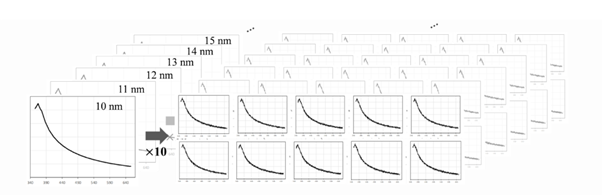
Figure 2. Generation of training data incorporating reflectance fluctuations
The research team generated training data by adding experimentally measured reflectance fluctuations (up to ±1%) to theoretical reflectance spectra, as illustrated in Figure 2. These synthesized spectra are closer to actual experimental conditions than purely theoretical spectra. Using this augmented dataset, the team trained an artificial neural network (ANN) to analyze thin-film thickness from reflectance spectra. To verify the developed model’s reliability, uncertainty evaluation was performed using certified reference materials (CRMs). The uncertainty analysis showed a dramatic improvement of about 30% in the measurement uncertainty arising from the difference between the deep-learning–predicted thickness and the CRM certified value. These results demonstrate that incorporating realistic measurement-environment effects into the training dataset plays a key role in improving measurement reliability. The experiment shows that when a deep-learning model actively reflects the measurement environment, highly reliable thickness measurements are achievable.
Meterlab will continue to strive to grow as a specialized research company that delivers measurement solutions with higher reliability—not only through in-house designed and manufactured spectrometer modules but also through advanced data-analysis techniques. Thank you.
*Paper link: https://ijpem-st.org/upload/pdf/ijpem-st-2024-00164.pdf
