Meterlab’s thin-film thickness measurement technology was utilized in the fabrication of a primary standard device used at the highest level in radiation measurement.
In radiation measurement, coincidence counting based on two or more detectors is widely used. Coincidence counting assumes, for example, that when a radioactive nucleus decays and simultaneously emits two particles in different directions, if two detectors placed at different positions detect particles at the same time, those detections can be regarded as coming from the same decay event. Because radiation is emitted continuously, only events in which the two detectors respond within a very short time interval are counted as meaningful to distinguish “the same event.”
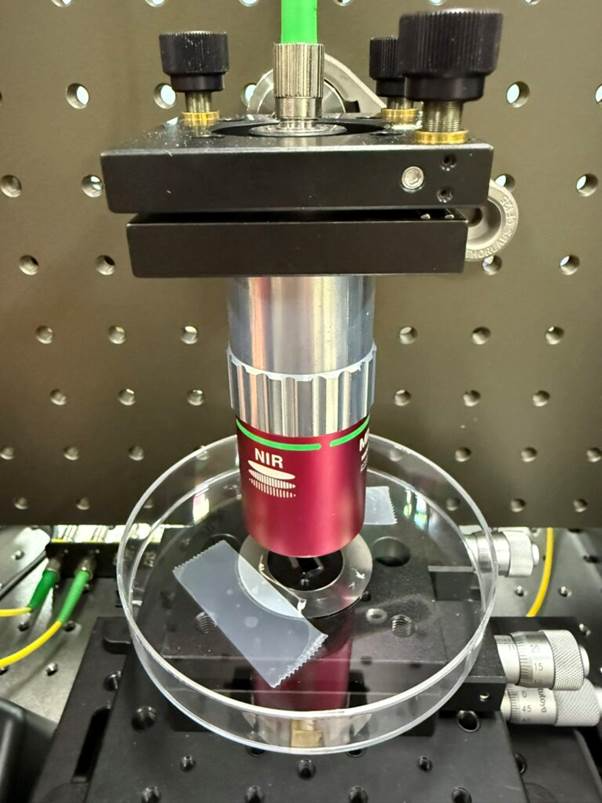
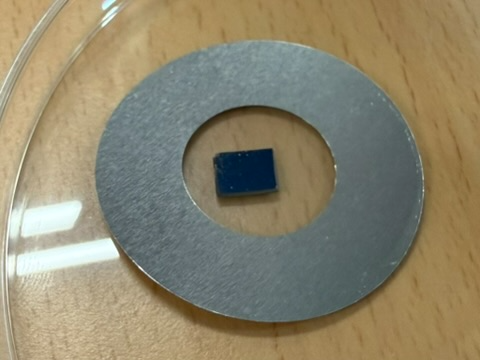
Figure 1. Meterlab’s thin-film thickness measurement instrument and the primary standard sample for radiation measurement
Research to develop a primary standard for 4πβ(PPC)-γ coincidence counting is being conducted at the Korea Research Institute of Standards and Science (KRISS). That work aims to produce thin films with controllable thickness for development of low-energy standard sources. In radiation measurements, the thickness of a film directly affects particle attenuation, so precise thickness measurement is essential to secure the reliability of the standard source. KRISS fabricated films with thicknesses ranging from 40 nm to 160 nm to minimize particle attenuation, and Meterlab performed high-precision thin-film thickness measurements using spectroscopic reflectometry.
Through this collaboration, the attenuation behavior of beta particles as a function of film thickness was characterized, and we expect these results to contribute to the development of the primary standard in the future.
